
How to pray sitting when sick or elderly
Standing if you can, sitting otherwise, lying down last: bowing and prostration with a gesture
Whoever cannot pray standing prays sitting, on the floor or on a chair; whoever cannot sit prays lying on their side. The prayer keeps its rak‘ahs and what is recited in it. If you cannot prostrate, you lean your upper body forward, a little for bowing, lower for prostration. The reward remains whole.
What the schools agree on
The four schools agree: whoever cannot stand, or is harmed by standing, prays sitting; whoever cannot sit prays lying down. The prayer is not dropped: you do it as you can.
In a voluntary prayer, someone able to stand may still pray sitting, with a smaller reward. In an obligatory prayer, standing remains required of whoever can.
-
فَٱتَّقُوا۟ ٱللَّهَ مَا ٱسْتَطَعْتُمْ وَٱسْمَعُوا۟ وَأَطِيعُوا۟ وَأَنفِقُوا۟ خَيْرًا لِّأَنفُسِكُمْ ۗ وَمَن يُوقَ شُحَّ نَفْسِهِۦ فَأُو۟لَـٰٓئِكَ هُمُ ٱلْمُفْلِحُونَ
fattaqu llāha ma staṭaʿtum wasmaʿū wa'aṭīʿū wa'anfiqū khayral li'anfusikum | wamay yūqa shuḥḥa nafsihī fa'ulā'ika humu l-mufliḥūn
So fear Allāh as much as you are able and listen and obey and spend [in the way of Allāh]; it is better for your selves. And whoever is protected from the stinginess of his soul - it is those who will be the successful.
‘Imran ibn Husayn, who was ill, asked the Prophet ﷺ about his prayer; he told him to pray standing, otherwise sitting, otherwise lying on his side.
The Prophet ﷺ said that when a person falls ill or travels, the reward is written for them of what they used to do at home and in good health.
Praying sitting, step by step
You do what you can, position by position: standing if possible, sitting otherwise, lying down last.
-
Standing, if you canal-qiyam
Whoever can stand for a while starts standing, even for part of the recitation, then sits when tiredness comes.

-
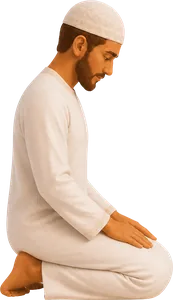
Sitting in place of standingal-qu‘ud
On the floor or on a chair, whichever is easiest; you recite Al-Fatiha and the surah as when standing.
-
Bowing, sittingar-ruku‘
You lean your upper body forward, a little, saying what you usually say in bowing.
-
Prostrationas-sujud
If you can, you prostrate on the ground. Otherwise, you lean your upper body lower than for bowing.
-
Lying down, as a last resort
Whoever cannot sit prays lying down, on the right side for most schools, and makes the gestures with the head.
Aisha never saw the Prophet ﷺ pray the night prayer sitting until he grew old: he would recite sitting, then stand to recite some thirty or forty more verses before bowing.
Asked about praying sitting, the Prophet ﷺ said that praying standing is better, and that the sitting prayer has half the reward of the standing one.
The four schools, all valid
| School | Sitting, in place of standing | Lying down, when sitting is not possible |
|---|---|---|
| Hanafi | In whatever way is easiest | On the back, feet toward the direction of prayer |
| Maliki | Cross-legged | On the right side, facing the direction of prayer |
| Shafi‘i | On the left foot (iftirash) | On the right side, facing the direction of prayer |
| Hanbali | Cross-legged | On the right side, facing the direction of prayer |
Which surahs when praying sitting?
The same as when standing. If the prayer is tiring, short surahs after Al-Fatiha are enough.
Frequently asked questions
Can I pray on a chair?
Yes, when standing or sitting on the floor is too difficult. For bowing and prostration, you lean your upper body; for a specific case, ask your imam.
Is my reward reduced if I pray sitting because of illness?
No: the Prophet ﷺ said that a sick person receives the reward of what they used to do in good health. For the scholars, half the reward concerns the voluntary prayer of someone who could stand.
What if I can no longer move at all?
You pray with gestures of the head, as you can. For this case, the schools differ: ask your imam what is right for you.
How can I check my Fatiha and the surahs I recite in prayer?
Recite them out loud in the Tilawa app: it follows your recitation word by word and shows you the words and tajweed rules to work on. During prayer, it can also follow the verses you recite.
Tilawa editorial team · Updated 2026-10-24 · Report an error